
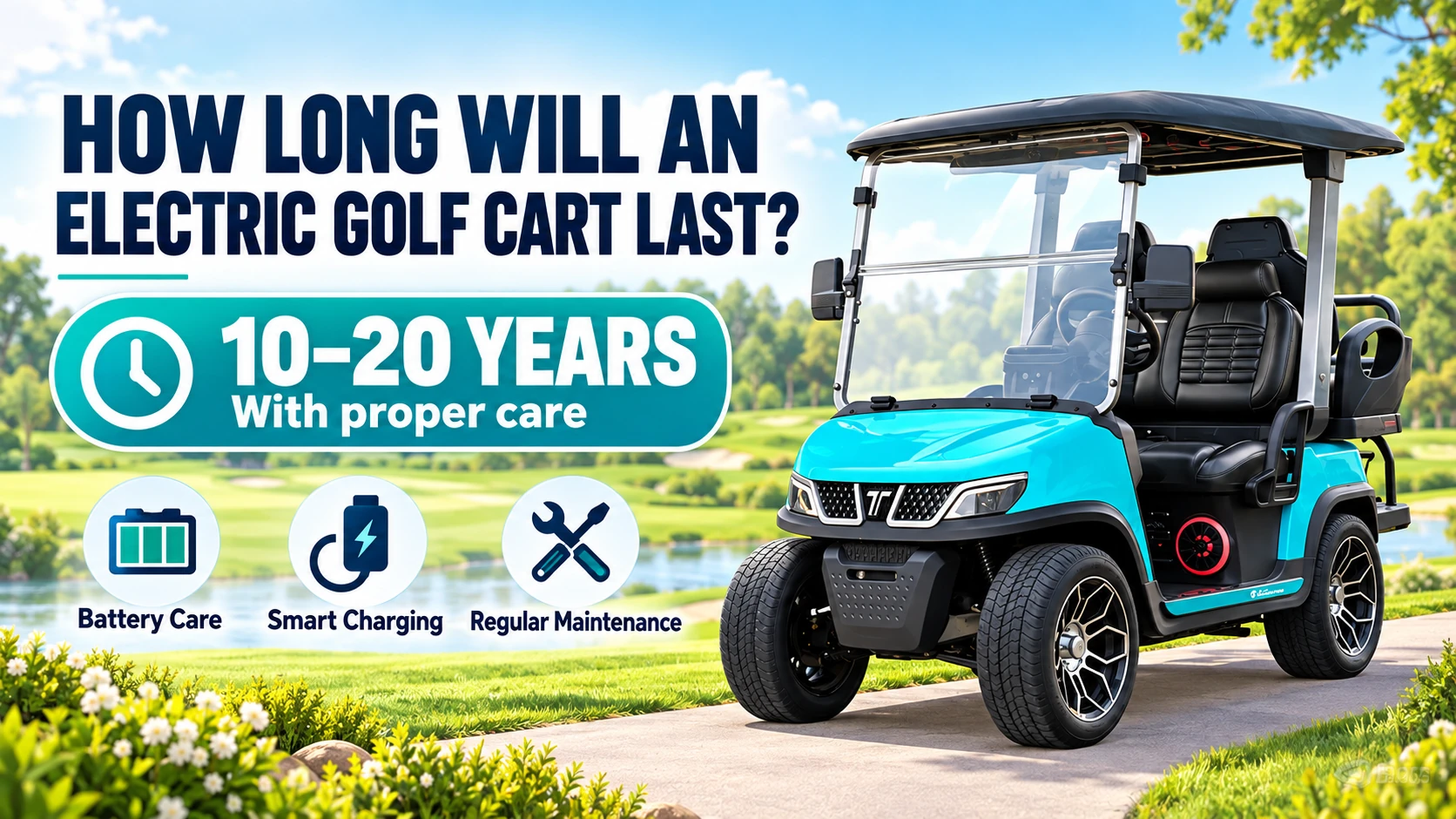
Quick Answer: Plan for approximately 10–20 years of vehicle service with regular maintenance and replacement parts. The original battery will usually need replacing sooner. These are general ownership estimates, not guaranteed lifespans or Tara warranty terms.
What Is the Average Electric Golf Cart Lifespan?
A cart’s age alone does not determine its condition. A lightly used vehicle stored indoors may remain dependable longer than a newer cart exposed to salt, rain, heavy loads, and neglected servicing.
Poorly maintained carts may become uneconomical to repair after roughly 5–8 years. Some carefully restored carts remain usable for several decades, occasionally approaching 40 years, but that usually involves substantial component replacement. It does not mean every original part lasts that long.
How Long Do Electric Golf Cart Components Last?
The frame can outlast several sets of batteries and tires. Use the following ranges for planning, then follow the manufacturer’s inspection schedule and replace parts according to condition.
| Component | Approximate Service Life | Main Influences |
|---|---|---|
| Frame and chassis | 20+ years in favorable conditions | Corrosion, impacts, storage, and frame material |
| Electric motor | 15–20 years may be achievable | Operating hours, overheating, load, and moisture |
| Motor controller | Approximately 10–15 years | Heat, electrical connections, and water exposure |
| Seats and upholstery | Approximately 10–15 years | Sunlight, weather, cleaning, and usage |
| Tires | Often several years; 4–7 is possible with light use | Tread wear, cracking, pressure, and mileage |
| Brake pads or shoes | Condition-based; no reliable universal year range | Driving distance, hills, load, and brake design |
How Long Do Electric Golf Cart Batteries Last?
The battery pack is a major replacement expense. Battery service life and vehicle service life are different: replacing a worn pack can keep an otherwise sound cart useful.
Lead-Acid Golf Cart Batteries
For a well-maintained deep-cycle lead-acid pack, approximately 4–6 years is a useful planning range, although intensive use can shorten it. Estimates around 500–1,200 cycles depend heavily on battery design and discharge depth.
Flooded lead-acid batteries need electrolyte checks, distilled-water top-offs, and terminal care. AGM and gel batteries do not require watering. Never treat all lead-acid batteries as if they share the same maintenance procedure.
Lithium-Ion Golf Cart Batteries
A quality lithium-ion pack may deliver roughly 8–12 years or longer under suitable conditions. Some products advertise 4,000 or more cycles, but these ratings apply under specified test conditions and cannot be assumed for every pack.
Lithium batteries need no watering, yet still require suitable charging, connection inspections, and appropriate storage. Calendar aging also matters, so a high cycle rating does not guarantee a particular number of years.
What Affects Electric Golf Cart Longevity?
Charging Habits
Use the approved charger and charging profile. Recharge lead-acid batteries after use and avoid routinely discharging them beyond about 50% when practical. For lithium batteries, follow the pack manufacturer’s recommendations rather than applying lead-acid rules automatically.
Climate and Storage
Heat accelerates battery aging, while cold temporarily reduces available performance. Humidity and coastal salt can encourage corrosion. Store the cart in a dry, sheltered location and follow the battery’s temperature limits, especially when charging lithium packs in freezing conditions.
Terrain, Payload, and Driving Style
Steep hills, repeated hard acceleration, rough surfaces, and heavy loads increase demand on the drivetrain and brakes. Stay within the rated payload and maintain correct tire pressure. Similar-looking carts can age differently when their daily workloads differ.
Maintenance Tip: Do not wait for a tire to fail or a brake to become noisy. Replace cracked or worn tires and service brakes when inspections show deterioration, even if the parts are younger than an estimated lifespan.
Tara Electric Golf Cart Models and Battery Specifications
When comparing a tara electric golf cart, match passenger capacity and battery configuration to your daily route. A larger battery can provide more stored energy, but capacity alone does not establish battery longevity.
| Model | Seating | Listed Lithium Battery | Typical Application |
|---|---|---|---|
| Spirit Air | 2 | 48V 105Ah | Golf course transportation |
| Spirit Plus | 2 | 48V 105Ah | Golf course transportation |
| Roadster 2 | 2 | 48V 105Ah | Personal and community transportation |
| Roadster 2+2 | 4 | 48V 160Ah | Family and resort transportation |
| Explorer 2+2 | 4 | 48V 160Ah | Resort and property transportation |
Specifications may vary by market, model year, and configuration. For road use, confirm that the specific vehicle is certified and registered as an LSV where required; a model name or 25 mph capability alone does not establish legal eligibility.
How to Help Your Electric Golf Cart Last Longer
- Inspect regularly: Check tires, brakes, steering, lights, and visible wiring.
- Charge correctly: Use approved equipment and avoid leaving the battery deeply discharged.
- Keep it clean: Remove dirt and salt without directing high-pressure water at electrical components.
- Store appropriately: Follow the manufacturer’s storage charge level and inspection intervals.
- Keep service records: Track repairs and battery performance to catch developing problems.
Frequently Asked Questions
Can an electric golf cart last 20 years?
Yes. A sound frame, consistent maintenance, and timely replacement of batteries and worn components can make 20 years achievable.
Does replacing the battery make an old cart like new?
No. A new battery can restore usable range, but it does not repair worn brakes, suspension, wiring, or structural corrosion.
When should you replace the whole cart?
Consider replacement when structural damage, recurring failures, limited parts availability, or repair costs make continued ownership impractical. Have the vehicle inspected before investing in a major battery upgrade.
