
An LSV golf cart is a low-speed four-wheel motor vehicle designed to reach speeds within the LSV category and equipped with required safety features for road use. It differs from a standard golf cart because it is built as a motor vehicle rather than simply as recreational course transportation.
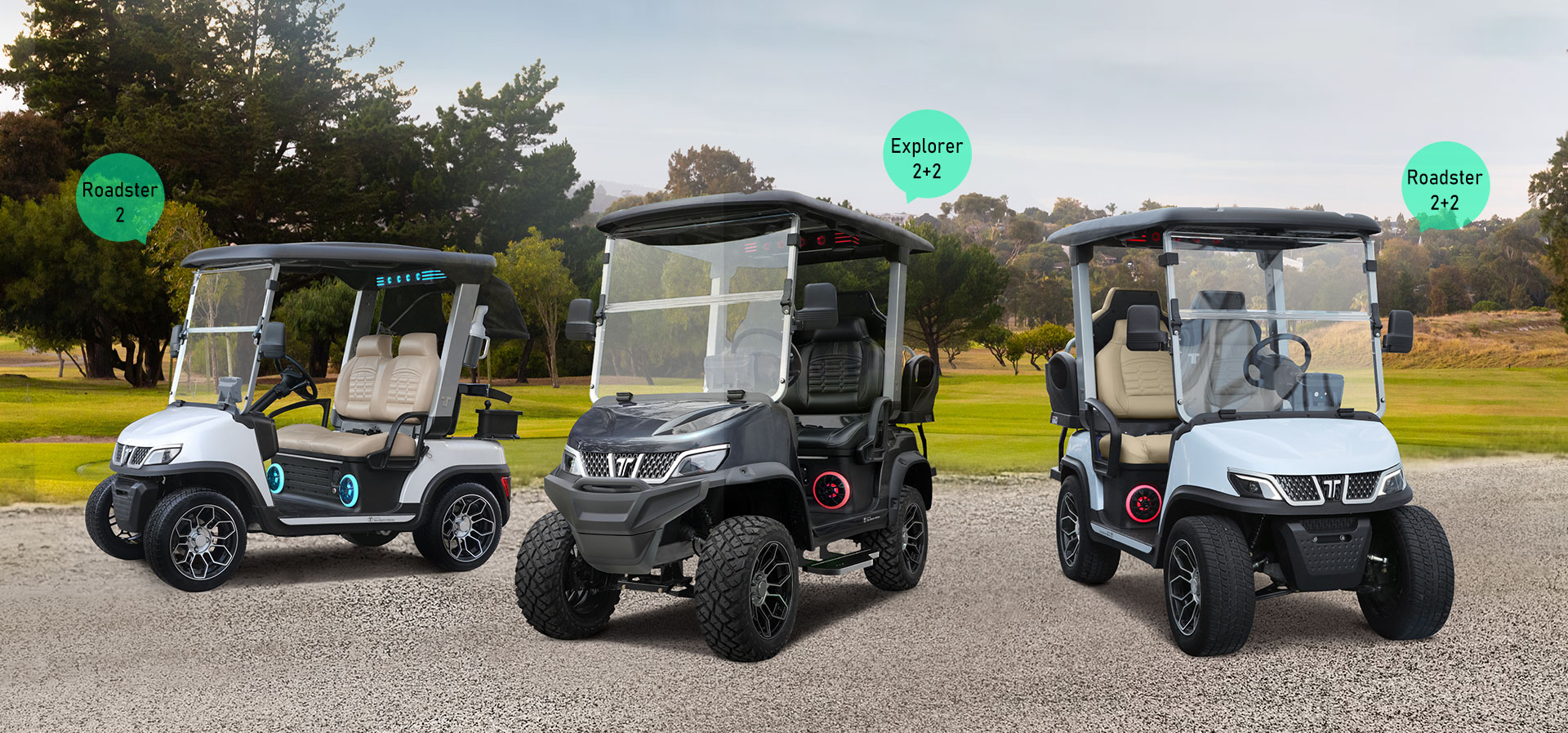
LSV stands for Low-Speed Vehicle. Unlike a basic golf cart used mainly on courses or private property, an LSV is designed and equipped for approved public-road use under applicable federal, state, and local rules. These vehicles combine the compact size and electric efficiency of a golf cart with automotive-style safety features such as headlights, turn signals, mirrors, seat belts, windshields, and vehicle identification numbers. Tara EV currently offers several personal transportation models that fall within the LSV category, including the Roadster 2, Roadster 2+2, and Explorer 2+2.
What Does LSV Mean?
LSV means Low-Speed Vehicle. In the United States, the term refers to a specific motor-vehicle category designed for lower-speed transportation.
An LSV generally combines:
- Four-wheel construction
- Low-speed electric operation
- Automotive-style lighting
- Passenger restraints
- Mirrors
- Windshield
- Vehicle Identification Number
- Registration capability
The exact rules governing where an LSV can operate vary between states, counties, and municipalities.
What Is the Typical Speed of an LSV?
LSVs are designed for low-speed road environments rather than highways or high-speed arterial roads.
Federal LSV standards generally cover vehicles capable of speeds greater than 20 mph but no more than 25 mph.
This speed range makes LSVs well suited for:
- Residential communities
- Resorts
- Campuses
- Large private properties
- Community transportation
- Short-distance local travel
Key Features of an LSV
| Feature | Purpose |
|---|---|
| Headlights | Provide forward visibility during low-light operation |
| Taillights | Improve rear visibility |
| Brake Lights | Warn following vehicles when slowing |
| Turn Signals | Communicate direction changes |
| Mirrors | Improve rearward and side visibility |
| Horn | Provides an audible warning |
| Windshield | Protects occupants and improves driving comfort |
| Seat Belts | Provide passenger restraint |
| VIN | Identifies the vehicle for documentation and registration |
LSV vs. Traditional Golf Cart
Although the two types of vehicles can look similar, their intended uses are different.
| Feature | Traditional Golf Cart | LSV |
|---|---|---|
| Primary Use | Golf courses and private property | Community and approved public-road transportation |
| Speed | Often around 15–20 mph | Designed within LSV speed requirements |
| VIN | May not include a road-use VIN | Included |
| Turn Signals | May be optional | Required equipment |
| Seat Belts | May vary | Required |
| Registration | Usually not registered as a motor vehicle | Typically registered for permitted road use |
A standard golf cart is primarily recreational equipment, while an LSV is designed as a road-capable motor vehicle with additional safety equipment and documentation.
Can LSV Golf Carts Be Driven on Public Roads?
Yes, LSVs can be operated on certain public roads when they are properly registered and meet state and local requirements.
Many jurisdictions permit LSVs on roads with posted speed limits of approximately 35 mph or lower.
However, local rules can vary significantly, so drivers should always check the regulations in the area where the vehicle will be used.
Requirements may include:
- Vehicle registration
- License plate
- Insurance
- Valid driver’s license
- Approved safety equipment
Do LSV Golf Carts Have a Title?
Yes, LSVs generally go through a motor-vehicle titling and registration process where required by the state.
Because they are classified as motor vehicles rather than ordinary recreational carts, owners commonly need documentation showing ownership and vehicle identity.
A typical process may involve:
- Manufacturer documentation
- VIN verification
- Title application
- Registration
- Proof of insurance
- Payment of applicable fees
Exact procedures differ by state, so owners should check their local motor-vehicle agency.
Does an LSV Need Insurance?
In many jurisdictions, yes. Because an LSV is registered for approved public-road operation, liability insurance is commonly required.
Coverage requirements depend on the state.
Owners should make sure the insurance policy specifically covers the vehicle’s classification and intended use.
Do You Need a Driver’s License?
A valid driver’s license is generally required when an LSV is operated on public roads.
The driver must also follow normal traffic rules, including:
- Traffic signals
- Stop signs
- Right-of-way rules
- Speed restrictions
- Passenger requirements
Can You Turn a Regular Golf Cart Into an LSV?
Installing headlights, seat belts, mirrors, and turn signals does not automatically make a conventional golf cart an LSV.
An LSV needs to satisfy applicable vehicle standards and documentation requirements.
For this reason, purchasing a vehicle originally designed and manufactured within the LSV category is usually more straightforward than attempting to convert a basic recreational cart.
If your goal is regular public-road transportation, choosing a factory-designed LSV can simplify registration, safety equipment, VIN documentation, and insurance.
What Are LSV Golf Carts Used For?
LSVs are useful anywhere people need efficient transportation over relatively short distances.
Popular applications include:
- Residential communities
- Retirement communities
- Resorts and hotels
- College campuses
- Parks
- Large private estates
- Recreational communities
- Short urban and suburban trips where permitted
Why Are Electric LSVs Popular?
Electric LSVs combine convenient mobility with several advantages over traditional combustion vehicles.
Benefits can include:
- Quiet operation
- No tailpipe emissions during operation
- Convenient home or facility charging
- Low routine drivetrain maintenance
- Smooth acceleration
- Compact dimensions
Lithium battery technology can further improve charging speed, battery weight, and overall energy efficiency.
Which Tara EV Models Are LSVs?
Tara EV currently offers three personal transportation models in the LSV category:
| Tara EV LSV Model | Seating | Typical Application |
|---|---|---|
| Roadster 2 | 2 passengers | Personal, community, resort and local transportation |
| Roadster 2+2 | 4 passengers | Family, community and resort transportation |
| Explorer 2+2 | 4 passengers | Community, recreation and versatile personal transportation |
The Roadster 2, Roadster 2+2, and Explorer 2+2 are all Tara EV LSV models. They combine electric power, passenger comfort, required safety equipment, and road-oriented transportation capability.
Tara Roadster 2
The Roadster 2 is a two-passenger LSV designed for personal transportation.
Its compact body makes it easy to maneuver through communities, resorts, campuses, and other low-speed environments.
The Roadster 2 is a practical option for drivers who need:
- Two-passenger transportation
- Electric power
- Compact dimensions
- Comfortable seating
- Road-oriented safety features
Tara Roadster 2+2
The Roadster 2+2 expands the Roadster platform to accommodate four passengers.
This makes it especially useful for families, resorts, residential communities, and locations where carrying additional passengers is important.
Compared with a two-seat configuration, the rear seating provides greater flexibility without sacrificing the compact nature of the vehicle.
Tara Explorer 2+2
The Explorer 2+2 is another four-passenger LSV in the Tara EV personal transportation lineup.
Its design emphasizes versatility, making it suitable for communities, recreational environments, large properties, and other transportation applications.
For users who want a more rugged appearance while still maintaining passenger comfort and electric operation, the Explorer 2+2 provides a strong option.
Why Choose a Tara EV LSV?
Tara EV’s LSV models combine electric mobility with comfort and modern vehicle technology.
Depending on model and configuration, advantages can include:
- Lithium battery power
- Low operating noise
- Smooth electric acceleration
- Comfortable passenger seating
- Automotive-style lighting
- Turn signals and mirrors
- Seat belts
- Modern displays and controls
These features make Tara EV vehicles suitable for both recreational and everyday local transportation.
LSV vs. Full-Size Car
An LSV is not intended to replace a conventional automobile in every situation.
Its lower maximum speed means it is best suited to short trips and lower-speed roads rather than highways.
| Feature | LSV | Conventional Car |
|---|---|---|
| Typical Speed | Low-speed transportation | Highway-capable |
| Vehicle Size | Compact | Larger |
| Parking | Easy in compact areas | Requires more space |
| Energy Use | Generally low | Higher |
| Best Use | Short local trips | Longer and high-speed travel |
How to Choose the Right Tara LSV
- Decide whether you need two or four seats.
- Consider your normal travel distance.
- Evaluate passenger and cargo needs.
- Check local registration requirements.
- Confirm insurance requirements.
- Compare comfort and technology features.
- Choose between the Roadster and Explorer design styles.
Choose the Roadster 2 when two-passenger mobility is enough, the Roadster 2+2 when extra passenger capacity is important, and the Explorer 2+2 when you want four seats combined with a more versatile recreational design.
Conclusion
An LSV golf cart is a four-wheeled low-speed motor vehicle equipped with the safety features and documentation required for approved road use. Unlike a traditional recreational golf cart, an LSV typically includes a VIN, lighting, turn signals, mirrors, seat belts, and other road-oriented equipment. Tara EV currently offers three LSV models: the Roadster 2, Roadster 2+2, and Explorer 2+2, providing two- and four-passenger options for community, resort, recreational, and short-distance transportation.
