
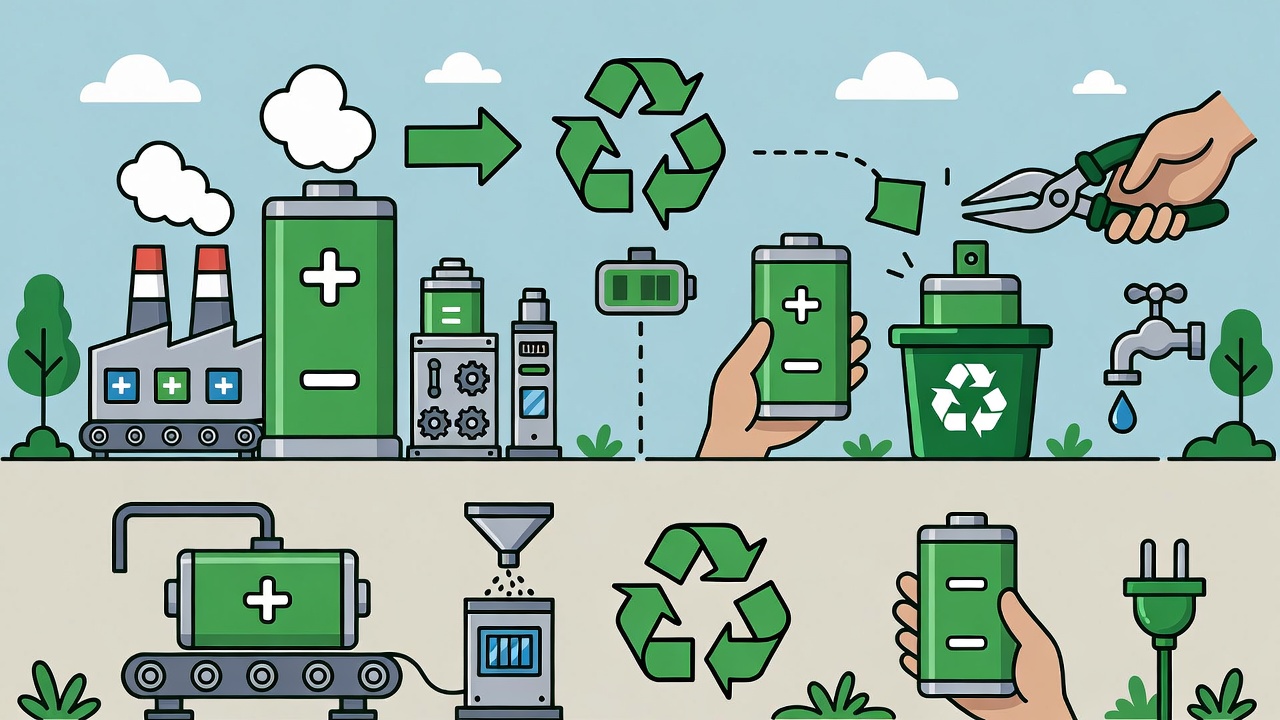
With lithium-ion batteries powering everything from phones to tools, proper end-of-life handling is crucial to prevent dangerous fires and environmental harm – always recycle through certified programs rather than discarding in regular trash or curbside bins.
As lithium-ion technology becomes ubiquitous, responsible disposal grows increasingly important. These batteries contain flammable materials that can spark fires if damaged or improperly handled, making standard waste streams unsafe.
Lithium-ion batteries pose a serious fire hazard when placed in household trash or recycling bins. Damage from crushing in garbage trucks or contact with other waste can trigger "thermal runaway" – a chain reaction releasing intense heat, flames, and toxic gases.
This has caused numerous fires at landfills, recycling facilities, and during transport. Even partially charged or seemingly dead batteries retain enough energy to ignite, endangering workers and communities. Environmental regulations classify them as hazardous waste, prohibiting regular disposal to protect safety and recover valuable materials like cobalt and lithium.
Never place rechargeable lithium-ion batteries in curbside recycling or trash. Instead:
Many municipalities offer periodic collection events. Damaged or swollen batteries require extra caution – place in sand or a fireproof container and contact professionals immediately.
Modern electric golf carts often feature large lithium-ion packs for extended range and performance. When these reach end-of-life (typically after 2,000+ cycles or 5-8 years), follow the same specialized recycling process.
Many manufacturers and dealers partner with recycling programs. Call2Recycle or certified e-waste centers handle larger packs safely. Avoid independent disposal due to size and fire risks.
Replacing a golf cart lithium-ion battery pack varies by voltage (commonly 48V), capacity (60-105Ah), and brand. In 2026, expect costs between $1,800 and $3,500 for quality systems, with mid-range 100Ah packs around $2,500-$3,000. Installation adds $100-$400 if professional.
Though higher upfront than lead-acid alternatives, lithium offers longer lifespan, faster charging, and zero maintenance – often paying for itself over time through reduced operating costs.
Proper lithium-ion battery disposal protects communities from fires while conserving resources through material recovery. Take the extra step to recycle responsibly – it's simple, free in most cases, and essential for safety.
