
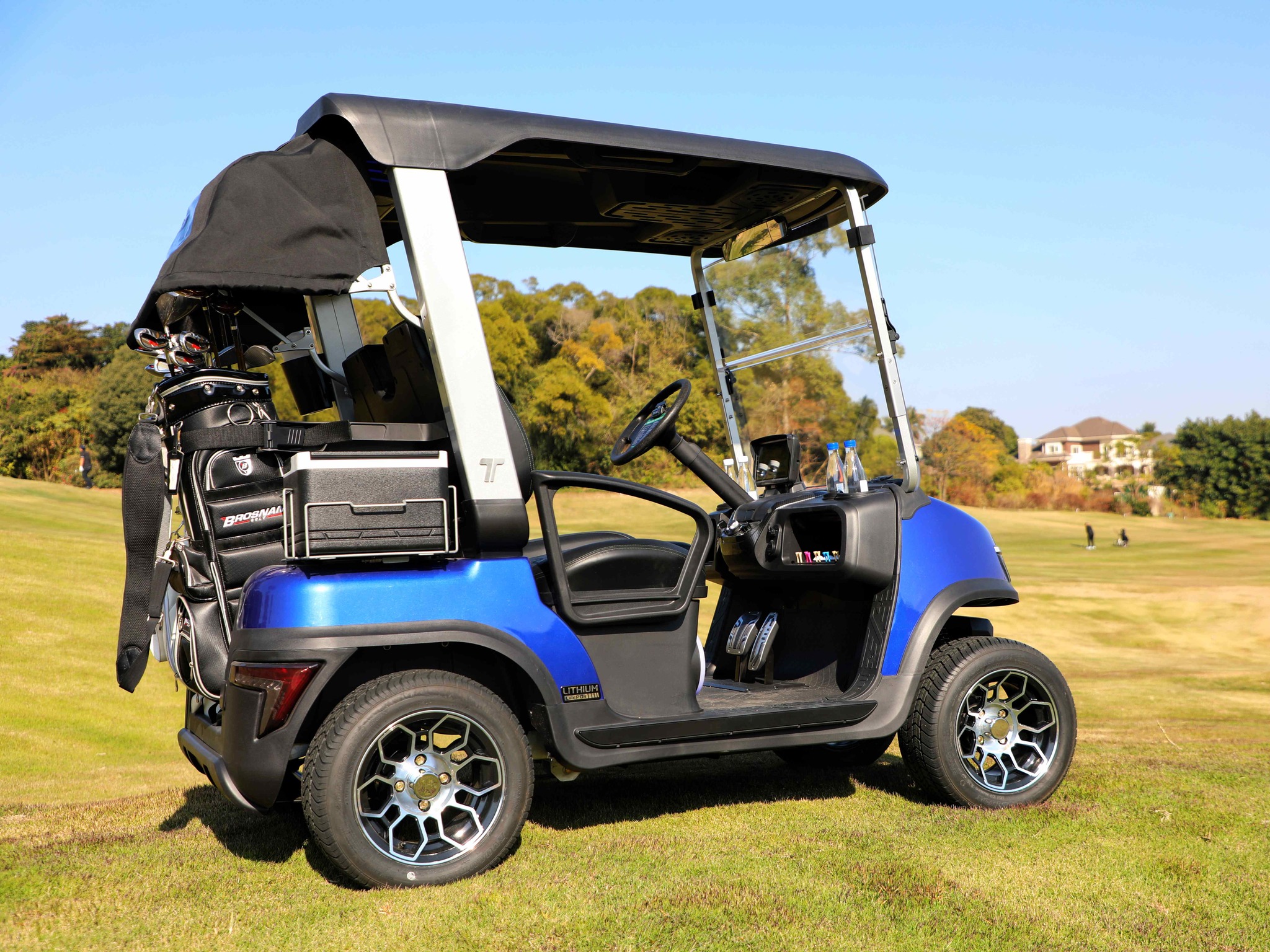
A golf cart can recover energy through regenerative braking, sending power back to the battery while slowing down or descending hills.
Many electric golf cart owners wonder how a golf cart can charge its battery when braking or going downhill. The answer is a technology called regenerative braking. Instead of wasting all motion energy as heat through traditional friction brakes, regenerative braking allows the electric motor to work in reverse. When the driver lifts off the accelerator, presses the brake, or travels downhill, the motor can act like a generator and convert part of the cart’s kinetic energy into electricity.
This recovered electricity is then sent back into the battery pack. The amount of energy recovered depends on the cart design, battery type, speed, terrain, controller settings, and driving habits. In ideal conditions, regenerative braking may help extend driving range by around 10% to 30%, especially on hilly courses or routes with frequent slowing and stopping. For golf carts used on rolling fairways, slopes, and long cart paths, this technology can make a noticeable difference in efficiency.
Modern golf carts from Tara EV, including the Spirit Air and Spirit Plus, are designed for golf course use and can benefit from regenerative braking technology. On hilly courses, regenerative braking helps improve downhill control, reduce energy waste, and support longer-lasting battery performance during a round.
Regenerative braking is a system that recovers energy while slowing an electric vehicle. In a standard braking system, kinetic energy is mostly converted into heat through brake pads, shoes, drums, or discs. That heat is lost into the air and cannot be reused. In a regenerative braking system, part of that energy is captured before it disappears.
In an electric golf cart, the motor normally uses electricity from the battery to turn the wheels. During regenerative braking, the process changes. The moving wheels turn the motor, and the motor acts as a generator. This generator action produces electricity, which is directed back into the battery through the controller and electrical system.
The result is a smoother and more efficient braking experience. Regenerative braking does not replace all mechanical braking needs, but it reduces how much the traditional brakes must work. It is especially useful in stop-and-go driving, downhill travel, and courses with elevation changes.
| Key Aspect | How It Works in a Golf Cart |
|---|---|
| Generator Mode | The electric motor reverses its function and acts as a generator when the cart slows down. |
| Downhill Control | The system helps control speed while going downhill, reducing the need for constant brake pressure. |
| Energy Recovery | A portion of kinetic energy is converted into electricity and returned to the battery pack. |
| Lithium Battery Considerations | Lithium battery systems must be managed properly to accept recovered energy safely and efficiently. |
| Reduced Brake Wear | Because the motor helps slow the cart, mechanical brake components may experience less wear over time. |
The most important part of regenerative braking is generator mode. During normal driving, the battery sends energy to the motor, and the motor turns the wheels. During braking or downhill travel, the moving wheels keep spinning the motor even though the driver is no longer asking for acceleration. The motor then creates electrical current instead of consuming it.
This current travels through the controller, which manages how much energy goes back into the battery. The system must regulate voltage and current carefully. If too much energy flows back too quickly, it could stress the battery or electronics. A well-designed system balances energy recovery with smooth braking feel and battery protection.
For the driver, the process feels natural. When the accelerator is released or braking begins, the cart slows down while quietly recovering energy. The driver may notice that the cart feels more controlled on downhill paths, especially compared with carts that rely only on traditional brakes.
Regenerative braking is most effective on hilly terrain. Golf courses often include slopes, elevated tees, rolling fairways, and long downhill cart paths. Without regenerative braking, the driver may need to apply the brake repeatedly to maintain a safe speed. With regenerative braking, the motor helps slow the cart and sends some recovered energy back to the battery.
This improves both comfort and efficiency. The cart feels more stable when descending hills, and the driver can maintain better control. It also reduces the chance of overheating or wearing mechanical brake parts from constant downhill braking.
On flatter courses, regenerative braking still works, but the energy recovery may be smaller. The biggest benefits usually appear when the cart frequently slows down, stops, or travels downhill.
Regenerative braking does not fully recharge a golf cart battery during normal use. It is not the same as plugging into a charger. However, it can return a useful amount of energy to the battery over time. Depending on driving conditions, regenerative braking may help extend battery range by approximately 10% to 30%.
The actual amount depends on several factors. A hilly golf course may recover more energy than a flat one. A driver who brakes smoothly and anticipates stops may recover more energy than someone who drives aggressively. A healthy battery and properly configured controller also improve results.
For golfers, even a modest range improvement can matter. A cart that uses energy more efficiently can complete a round with more battery reserve, especially when carrying passengers, clubs, coolers, and accessories.
Lithium battery systems are increasingly popular in modern golf carts because they are lighter, longer-lasting, and more efficient than many traditional battery options. However, lithium batteries require proper management when accepting regenerative energy.
A quality lithium battery system uses a battery management system, often called a BMS. This system monitors voltage, current, temperature, and battery condition. During regenerative braking, the BMS helps ensure the battery can safely accept recovered energy.
There is one important limitation: if the battery is already fully charged, it may not be able to accept much additional energy from regenerative braking. In that situation, the system may reduce regeneration or rely more on mechanical brakes. This is normal and helps protect the battery.
Another major advantage of regenerative braking is reduced brake wear. Since the electric motor helps slow the golf cart, the mechanical brakes do not need to do all the work. Over time, this can reduce wear on brake pads, shoes, drums, discs, and related components.
This does not mean mechanical brakes are unnecessary. Golf carts still need reliable traditional brakes for full stopping power, emergency stops, parking, and situations where regeneration is limited. Regenerative braking is best understood as a support system that improves efficiency and reduces brake workload.
Although regenerative braking is useful, it has some limitations. First, it does not recover all energy. Some energy is still lost as heat, friction, and electrical resistance. Drivers should not expect regenerative braking to replace regular charging.
Second, braking feel can be different. Some carts may feel like they slow down more strongly when the driver releases the accelerator. This can be helpful, but new drivers may need time to get used to it.
Third, regeneration depends on battery condition and charge level. If the battery is full, cold, overheated, or unable to accept charge efficiently, the system may reduce energy recovery. In those cases, mechanical brakes become more important.
Fourth, regenerative braking systems add electronic complexity. The motor, controller, wiring, and battery management system must work together properly. If there is a fault in the system, performance may be reduced or warning indicators may appear.
Finally, regenerative braking is less effective at very low speeds. As the cart slows almost to a stop, mechanical braking may still be needed to complete the stop and hold the cart still.
Drivers can improve energy recovery by using smooth driving habits. Instead of accelerating hard and braking suddenly, anticipate turns, stops, and downhill sections. Release the accelerator early and let the regenerative system slow the cart gradually when appropriate.
On downhill paths, avoid riding the mechanical brake constantly unless necessary. Let the cart’s regenerative braking assist with speed control while staying alert and ready to brake. Always drive according to course rules, path conditions, weather, and pedestrian traffic.
Keeping the battery healthy also helps. Use the proper charger, avoid neglecting maintenance, and follow the manufacturer’s charging recommendations. A well-maintained battery system can accept regenerated energy more effectively.
Regenerative braking is especially valuable for golf carts designed for course use. Many courses include elevation changes, winding paths, and frequent stopping points. A cart that can recover energy during braking or downhill travel can help preserve range and improve control throughout the round.
Tara EV’s Spirit Air and Spirit Plus are designed with golfers in mind. These models combine course-focused comfort, practical design, and modern electric performance. With regenerative braking, they can deliver a more efficient ride, especially on hilly courses where downhill energy recovery is most effective.
For golfers who want longer range, smoother driving, and reduced brake wear, choosing a modern golf cart with regenerative braking is a smart decision. It supports both convenience and confidence from the first tee to the final green.
A golf cart charges its battery while braking or going downhill through regenerative braking. In this process, the electric motor acts as a generator, converting motion energy into electricity and sending part of that power back into the battery pack. While it does not replace plug-in charging, it can help extend range, improve downhill control, and reduce mechanical brake wear.
Regenerative braking works best on hilly courses and routes with frequent slowing. It also requires a properly managed battery system, especially when lithium batteries are used. Modern course-focused golf carts such as Tara EV’s Spirit Air and Spirit Plus use this technology to help deliver longer-lasting, more efficient performance on the course. For golfers who value range, comfort, and control, regenerative braking is one of the most useful features in today’s electric golf carts.
