
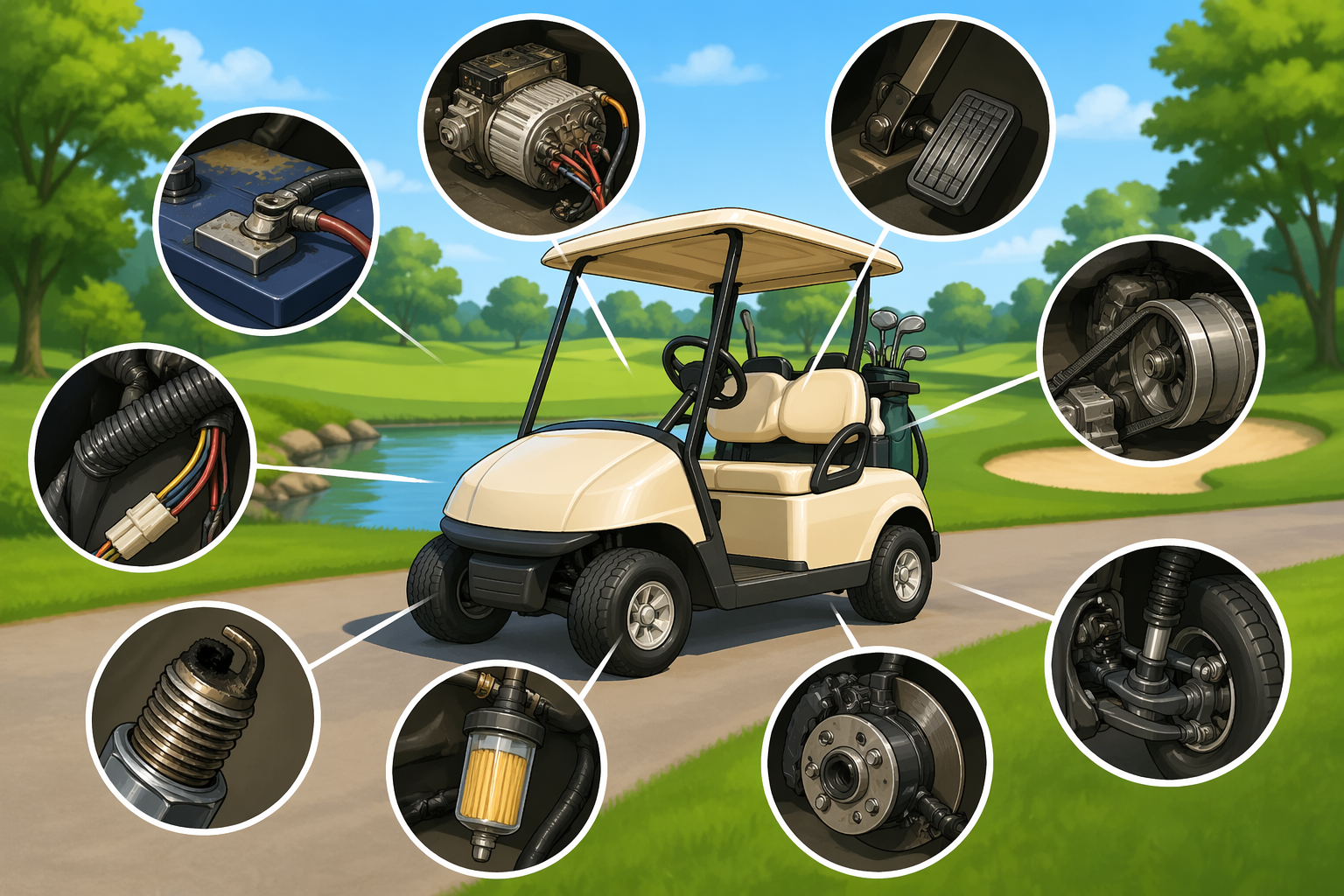
A golf cart that suddenly jerks can be frustrating and potentially unsafe. The issue usually stems from inconsistent power flow caused by loose battery connections, a failing speed sensor, or controller problems. Electric models often suffer from weak batteries or solenoid issues, while gas-powered ones may have carburetor clogs or belt wear.
Smooth acceleration is something every golf cart owner expects. When the cart suddenly lunges forward or hesitates in short, jerky movements, it signals an interruption in power delivery. This problem appears more often in older carts or those that see heavy daily use. Identifying the root cause early prevents bigger repairs and keeps your rides comfortable and reliable.
Most modern electric carts jerk because of electrical problems. Loose or corroded battery terminals are the top culprit — even a thin layer of corrosion can break the connection under load. Weak or aging batteries that can’t deliver steady voltage also cause hesitation. A faulty solenoid often clicks loudly but fails to send full power to the motor. Other frequent issues include a dirty or malfunctioning speed sensor and problems with the motor controller itself.
Gas-powered carts jerk for mechanical reasons. A clogged carburetor restricts fuel flow, leading to uneven power. Worn drive belts slip under acceleration and then grab suddenly. Dirty air filters or failing spark plugs also create hesitation. In some cases, a misadjusted throttle cable or worn throttle position sensor creates the same jerky feel.
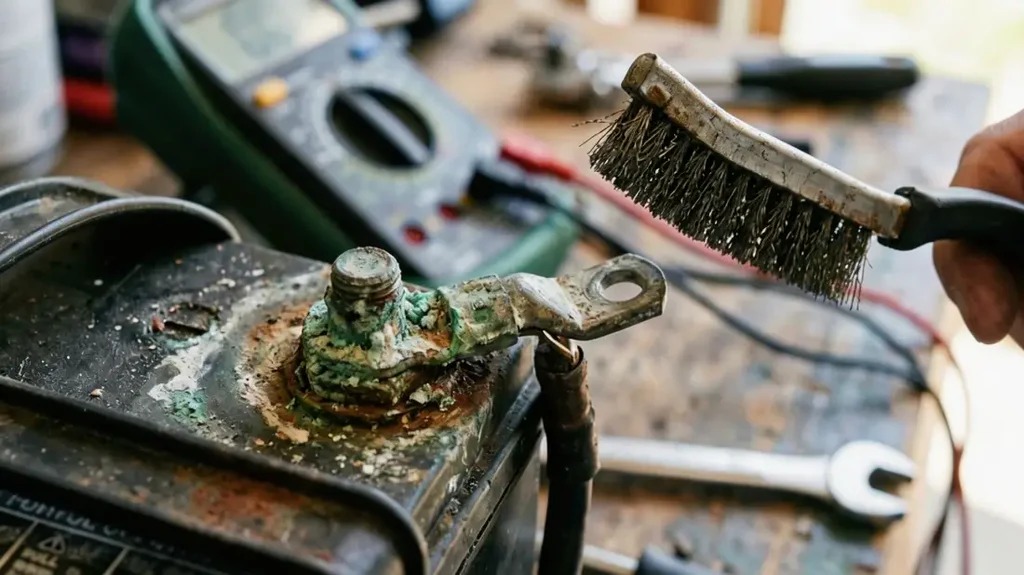
Begin with the simplest fix. Turn the cart off, remove the seat, and inspect every battery terminal. Clean any white or green corrosion with a baking-soda-and-water solution and a wire brush. Tighten all connections until they are snug but not over-tightened. For electric carts, test each battery individually with a voltmeter after a full charge. A healthy 6-volt battery should read above 6.3 volts; an 8-volt should read above 8.5 volts.
Static voltage readings only tell part of the story. Have someone sit in the cart and slowly press the accelerator while you monitor voltage at the main battery pack. A sudden drop of more than 2–3 volts usually points to weak batteries or poor connections.
On gas models, open the engine compartment and check the drive belt for cracks, glazing, or looseness. Replace any belt that shows wear. While you’re there, clean or replace the air filter and spark plugs.
Many carts have safety switches under the seat or on the accelerator pedal. A dirty or sticking switch can send erratic signals to the controller. Clean the contacts or replace the switch if it feels sticky.
If basic cleaning and tightening do not solve the jerking, the speed controller or motor may need professional diagnosis. In electric carts, a failing solenoid is a common hidden cause — it may click but not fully engage. Gas carts sometimes need a carburetor rebuild or throttle cable adjustment. Always work on a level surface with the parking brake engaged and wear safety glasses when handling batteries.
If you have checked connections, cleaned terminals, tested batteries, and inspected belts yet the jerking continues, it is time to consult a technician. Modern electric carts use sophisticated controllers that require diagnostic tools most owners do not have. Addressing the problem early prevents further damage to expensive components.
Keep battery terminals clean and tight year-round. Charge after every use and avoid letting batteries sit discharged. For gas carts, follow the manufacturer’s maintenance schedule for belts, filters, and spark plugs. A little preventive care goes a long way toward smooth, reliable performance.
Tara EV reminds you that a sudden jerking in a golf cart is almost always caused by interrupted power — whether electrical on an electric model or mechanical on a gas model. By starting with simple checks like battery terminals, voltage testing, and belt inspection, most owners can diagnose and fix the issue themselves. Regular maintenance keeps your cart responding smoothly every time you press the accelerator.
