
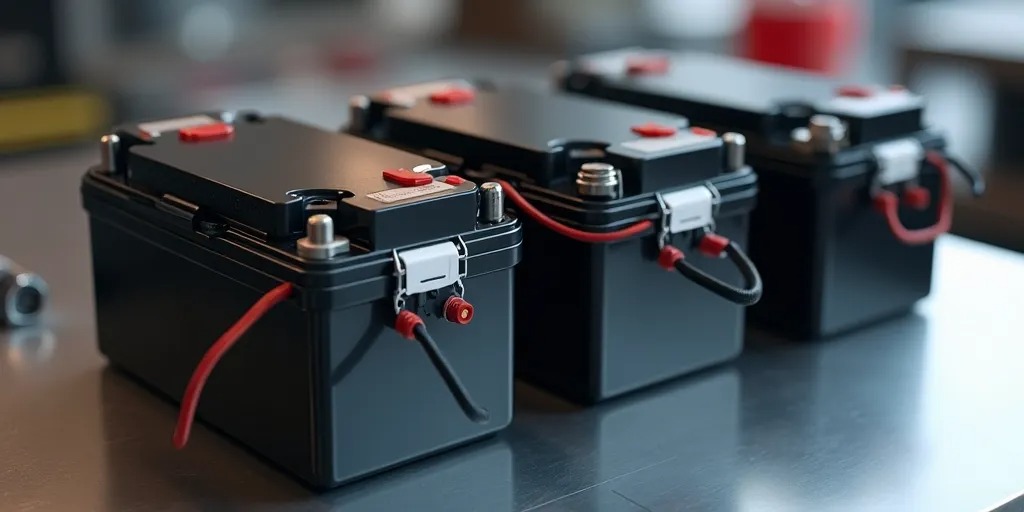
Technically, it is possible to replace three 8-volt batteries with two 12-volt deep cycle marine batteries in a golf cart since both setups can achieve a 24-volt total. However, this swap is usually not recommended. Marine batteries are built for steady, low-draw applications, while golf carts demand high-amperage bursts that quickly strain marine batteries and reduce overall performance and lifespan.
When considering a battery swap, voltage matching is the first requirement. Three 8-volt batteries wired in series produce 24 volts, and two 12-volt batteries wired in series also produce 24 volts. In theory, the total system voltage remains the same, so the cart’s motor and controller should still receive the correct power. However, voltage is only part of the equation. The actual capacity, discharge rate, and internal construction of the batteries play a much larger role in how well the cart performs on the course or trail.
Although the nominal voltage matches, marine batteries are engineered for applications like boats where power draw is relatively steady and low. Golf carts, on the other hand, require sudden high-amperage draws when accelerating, climbing hills, or starting from a stop. Marine batteries are not optimized for these repeated high-current bursts, leading to voltage sag, reduced speed, and shorter runtime compared to purpose-built golf cart batteries.
Users who attempt this swap often report noticeably weaker acceleration, shorter driving range per charge, and quicker overall battery fatigue. The cart may feel sluggish, especially on inclines or when carrying passengers. Because marine batteries are not designed for the frequent deep cycling typical of golf cart use, their effective capacity drops faster than expected.
Repeated high-amperage use can cause excessive heat buildup inside marine batteries, accelerating internal wear and potentially shortening their lifespan dramatically. In some cases, the mismatch can strain the cart’s motor controller or wiring, leading to premature failure of other components. Over time, this modification often ends up costing more in repairs and replacements than simply using the correct golf cart batteries from the start.
Two 12-volt marine batteries may not fit neatly into the existing battery compartment designed for three 8-volt units. Differences in physical size, terminal layout, and weight distribution can create installation challenges and affect the cart’s balance and handling. Improper fit can also lead to loose connections or vibration damage during use.
The terms are often used interchangeably, but there is an important distinction. A standard marine battery is typically a dual-purpose battery designed to provide both starting power (cranking amps for engines) and some deep-cycle capability for accessories. A true deep cycle marine battery is built specifically for repeated deep discharges and recharges, with thicker plates and more robust construction to withstand frequent cycling. Even deep cycle marine batteries, however, are optimized for steady, moderate loads rather than the high-current, stop-and-go demands of a golf cart. This fundamental difference in design makes them a poor long-term substitute for dedicated golf cart batteries.
Golf cart batteries are specifically engineered for the unique demands of electric carts: high torque delivery, frequent cycling, and reliable performance over short to medium distances. They are built with the correct plate thickness, separator design, and chemistry to handle the rapid power demands of acceleration and hill climbing. Using the right batteries ensures optimal range, consistent speed, and maximum lifespan. Many owners who try the marine battery swap eventually return to proper golf cart batteries after experiencing disappointing performance and higher long-term costs.
While it is technically possible to replace three 8-volt batteries with two 12-volt deep cycle marine batteries in a golf cart, this modification is generally not recommended. The mismatch in design, discharge characteristics, and durability leads to reduced performance, shorter runtime, and accelerated wear. For reliable daily operation and the best long-term value, it is far better to use batteries specifically designed for golf carts. Whether you need a direct replacement or are considering an upgrade, choosing the correct battery type ensures your cart performs as expected and lasts longer.
