
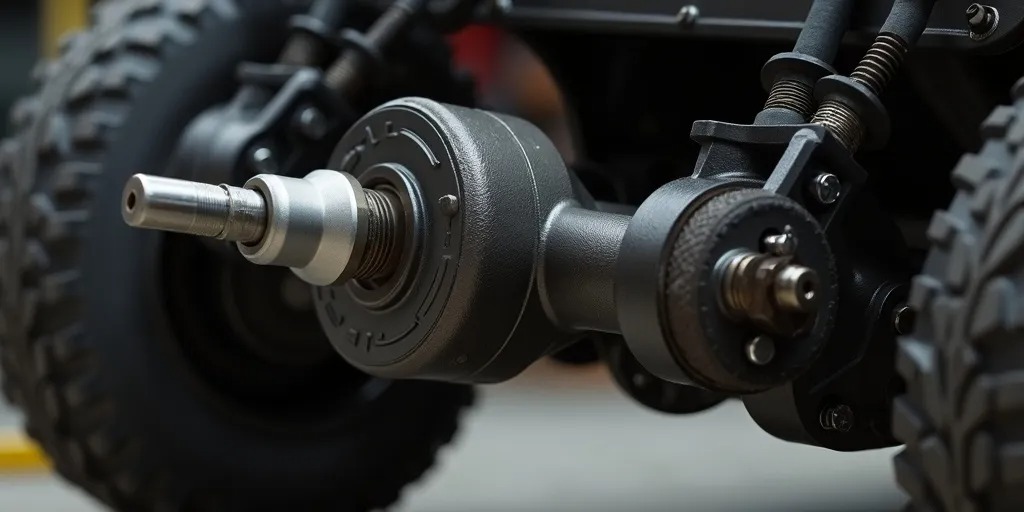
Choosing a golf cart rear axle requires matching the specific make, model, and year of your cart, alongside considering the intended use (speed vs. torque) and motor type (electric vs. gas). Key factors include identifying the correct gear ratio (typically 12:1 for stock), ensuring the axle matches your brake system (drum or disc), and confirming the motor shaft type.
The rear axle is the central mechanical component that transfers power from the motor or engine to the rear wheels. It houses the differential, axle shafts, bearings, and gears that allow the cart to move forward while providing torque and speed. In simple terms, it is the “backbone” of the drivetrain. A properly matched rear axle ensures smooth power delivery, correct speed, adequate torque, and safe braking performance.
The rear axle directly affects every aspect of your cart’s performance and safety. An incorrect axle can cause poor acceleration, excessive noise, premature wear on the motor or drivetrain, or even dangerous handling issues. Choosing the wrong gear ratio may leave you with either insufficient torque for hills or an uncomfortably high top speed on flat ground. Brake compatibility is equally critical — mismatched brakes can lead to poor stopping power or complete brake failure. For electric carts, the axle must also match the motor shaft spline or keyway to prevent slippage or damage.
Start by determining the exact make, model, and year of your golf cart. Check the manufacturer’s badge, serial number plate (often located under the seat or on the frame), or owner’s manual. Common brands include Evolution, Tara, and custom builds. Different brands and even different years within the same brand often use unique axle designs, spline counts, and mounting patterns. Taking a photo of your current axle and noting the gear ratio stamped on the housing will save time and prevent ordering the wrong part.
Decide how you primarily use the cart. Neighborhood cruising favors higher top speed (lower gear ratio). Golf course or hilly terrain requires more torque (higher gear ratio). Electric carts usually benefit from a 12:1 to 14:1 ratio for balanced performance, while gas carts may need different ratios depending on engine size. If you have added lift kits, larger tires, or heavy accessories, you will likely need a stronger axle with a higher torque rating to prevent strain on the drivetrain.
Three critical elements must match perfectly:
After selecting the correct axle, verify bolt pattern, overall length, and mounting points. Professional installation is recommended if you are not experienced with drivetrain work. Improper installation can cause vibration, noise, or premature failure. After installation, perform a test drive in a safe area and check for smooth operation, proper braking, and absence of unusual noises.
Buying an axle based only on price or appearance is a frequent error. Always match the exact OEM specifications. Another mistake is ignoring brake compatibility — swapping to disc brakes without the correct axle can lead to dangerous braking performance. Finally, many owners forget to consider future upgrades; choosing a slightly stronger axle now can save money and time later if you decide to add larger tires or a more powerful motor.
Choosing the right golf cart rear axle is a critical decision that directly impacts performance, safety, and longevity. By carefully identifying your cart’s make, model, year, intended use, and matching gear ratio, brake system, and motor shaft type, you can ensure reliable and efficient operation. Whether you need stock performance for daily golfing or upgraded torque for hilly terrain, taking the time to select the correct axle pays off in smoother rides and fewer repairs.
