
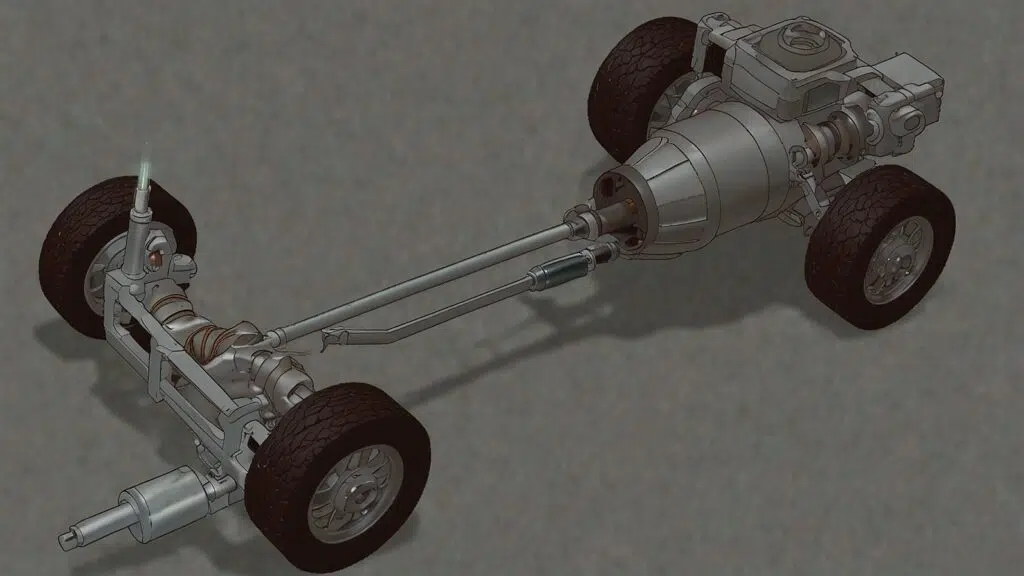
Electric golf cart motors turn battery power into smooth wheel movement, giving carts quiet, efficient, and reliable performance for daily driving.
Understanding how an electric golf cart motor works is helpful for owners, buyers, fleet managers, and anyone comparing electric mobility options. Unlike a gas engine, an electric motor does not rely on fuel combustion, pistons, or exhaust. Instead, it uses stored battery energy, electrical current, magnetic fields, and a drivetrain to move the vehicle. This simple but effective system is one reason electric carts have become popular on golf courses, resorts, campuses, neighborhoods, farms, and commercial properties.
At the most basic level, an electric golf cart motor works by using magnets and electrical current to convert battery energy into rotational movement. When you press the accelerator pedal, electricity flows from the battery pack to the motor through a speed controller. Inside the motor, electrical current creates magnetic fields. These magnetic fields push and pull against each other, causing the motor shaft to spin. That spinning motion is then transferred through the drivetrain to the wheels, allowing the cart to move forward or backward.
To understand the motor, it helps to understand the full power system. An electric golf cart usually includes four core components: the batteries, the speed controller, the motor, and the drivetrain. Each part plays an important role in turning stored electrical energy into usable driving power.
The batteries are the energy source of the cart. Most electric golf carts use either deep-cycle lead-acid batteries or lithium-ion batteries. Traditional lead-acid batteries are common because they are affordable and widely available. Lithium-ion batteries are becoming more popular because they are lighter, charge faster, require less maintenance, and often last longer.
Golf cart battery systems commonly operate at 36 volts, 48 volts, or higher, depending on the model and performance requirements. A higher-voltage system can often deliver better efficiency, stronger acceleration, and improved hill-climbing ability when paired with the right motor and controller.
The speed controller is often described as the brain of the electric golf cart. It manages how much electrical current travels from the battery pack to the motor. When you press the accelerator lightly, the controller sends a smaller amount of current, allowing the cart to move slowly. When you press the pedal harder, the controller allows more current to flow, increasing motor speed and torque.
This regulation is important because an electric motor can produce strong torque almost instantly. Without a controller, power delivery would be rough, inefficient, and difficult to manage. The controller helps create smooth acceleration, better energy use, and safer driving.
The motor is the heart of the electric golf cart. Its job is to convert electrical power into mechanical rotation. Many golf carts use either a DC motor or an AC motor. DC motors have been common in older and standard golf carts because they are simple and reliable. AC motors are often used in newer or higher-performance carts because they can provide better efficiency, stronger control, and improved performance on hills.
Inside the motor, magnetic force creates motion. In simple terms, electricity flows through coils of wire, creating an electromagnetic field. This field interacts with magnets or other electromagnetic fields inside the motor. The attraction and repulsion between these fields cause the rotor or armature to spin. The spinning shaft then provides the mechanical power needed to move the cart.
The drivetrain connects the motor to the wheels. Since electric motors can spin at high speeds, gears are used to reduce motor speed and increase torque. Torque is the turning force that helps the cart start moving, carry passengers, pull loads, or climb hills. The drivetrain makes sure the motor’s rotation is converted into practical wheel movement.
When the driver presses the accelerator pedal, the pedal sends a signal to the speed controller. The controller reads how much power the driver is requesting and then draws the correct amount of current from the battery pack. That current flows to the motor, where it creates magnetic fields that generate rotation.
As the motor shaft spins, the drivetrain transfers that rotational force to the rear axle and wheels. The harder the pedal is pressed, the more current the controller sends to the motor, and the faster the motor spins. When the driver releases the pedal, the controller reduces or stops current flow, slowing the cart down.
Many modern electric golf carts also use regenerative braking. With regenerative braking, the motor can act like a generator during deceleration. Instead of wasting all braking energy as heat, the system converts some of the motion back into electrical energy and sends it to the battery. This can improve efficiency and slightly extend driving range, especially in stop-and-go use.
Electric motors are efficient because they convert a high percentage of electrical energy into movement. Gas engines lose a lot of energy through heat, friction, and exhaust. Electric motors have fewer moving parts and do not need oil changes, spark plugs, fuel filters, or exhaust systems. This makes them quieter, cleaner, and easier to maintain.
Another advantage is instant torque. Electric motors can deliver strong pulling power from a standstill, which is useful for carrying passengers, driving uphill, or moving across grass and uneven surfaces. This smooth torque delivery is one of the reasons electric carts feel easy and comfortable to drive.
Several factors influence how well an electric golf cart motor performs. Battery voltage and battery condition are very important. Weak or aging batteries may reduce speed, range, and climbing ability. The controller also matters because it determines how much current can safely reach the motor. Motor type, gear ratio, tire size, vehicle weight, terrain, and passenger load can all affect performance.
For example, a cart used on flat golf course paths may not need the same torque as a cart used on hills, farms, or commercial properties. A heavy-duty cart may require a stronger motor, higher-capacity batteries, and a more capable controller to deliver reliable performance.
An electric golf cart motor works through a smart combination of battery power, current control, magnetic force, and mechanical gearing. The batteries store energy, the controller manages power flow, the motor creates rotation, and the drivetrain transfers that rotation to the wheels. Together, these components create a quiet, smooth, and efficient driving experience.
Whether used for recreation, transportation, hospitality, or utility work, electric golf carts offer a practical and low-maintenance mobility solution. By understanding how the motor and power system work, owners can make better choices about maintenance, upgrades, battery care, and long-term performance.
