
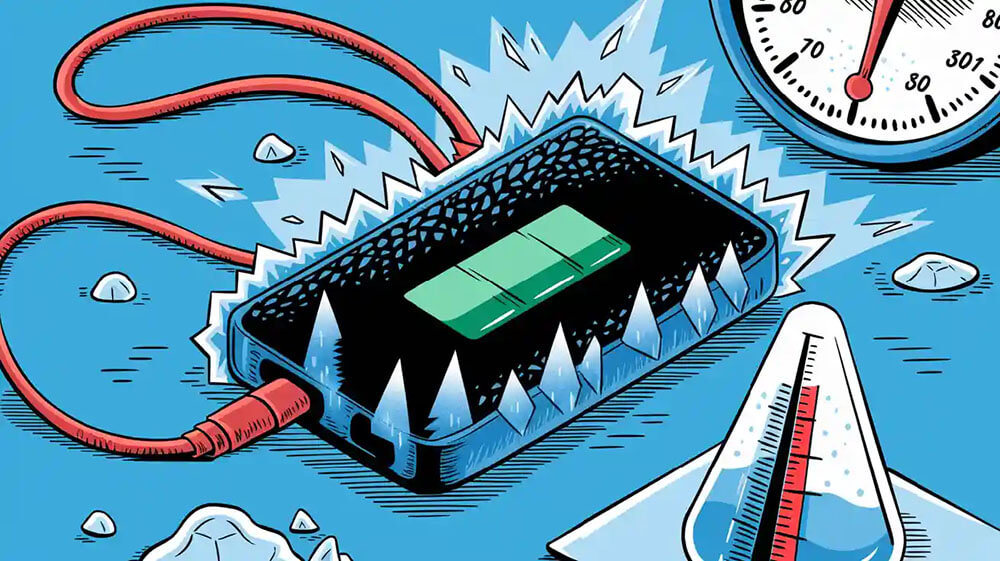
While lithium-ion batteries don't literally freeze solid like water, extreme cold thickens their electrolyte, sharply raising internal resistance and cutting power output—making charging risky and potentially damaging below -4°F (-20°C).
Modern devices rely on lithium-ion batteries for efficient energy, but winter conditions in colder regions challenge their chemistry. Understanding these effects helps maintain performance and prevent long-term issues.
Low temperatures slow down the internal processes essential for power delivery:
Most lithium-ion cells operate safely down to 32°F (0°C) with reduced output, but performance drops noticeably below that, becoming minimal around -4°F to -22°F (-20°C to -30°C).
Discharging (using) a cold battery is generally safe, though less effective. Charging one that's frozen, however, invites serious problems. Low temperatures promote lithium plating on the anode—metallic lithium deposits that permanently reduce capacity and raise internal short-circuit risks.
Many modern systems include low-temperature cutoffs to prevent charging until warmed, but always check device guidelines to avoid irreversible damage.
Cold storage doesn't usually harm batteries if handled correctly:
In northern US states with harsh winters, these steps preserve lifespan and readiness for spring.
In regions experiencing deep freezes, owners of electric golf carts equipped with lithium-ion packs should prioritize protection. Store the cart in a heated garage or insulated shelter to maintain moderate temperatures.
Consult the user manual for model-specific advice, such as disconnecting packs or using temperature-controlled chargers. Proper winterizing ensures reliable performance when warmer weather returns.
Lithium-ion batteries handle cold better than older types in many ways, but respecting temperature limits prevents issues. With thoughtful storage and usage habits, they deliver consistent power even through challenging winters.
