
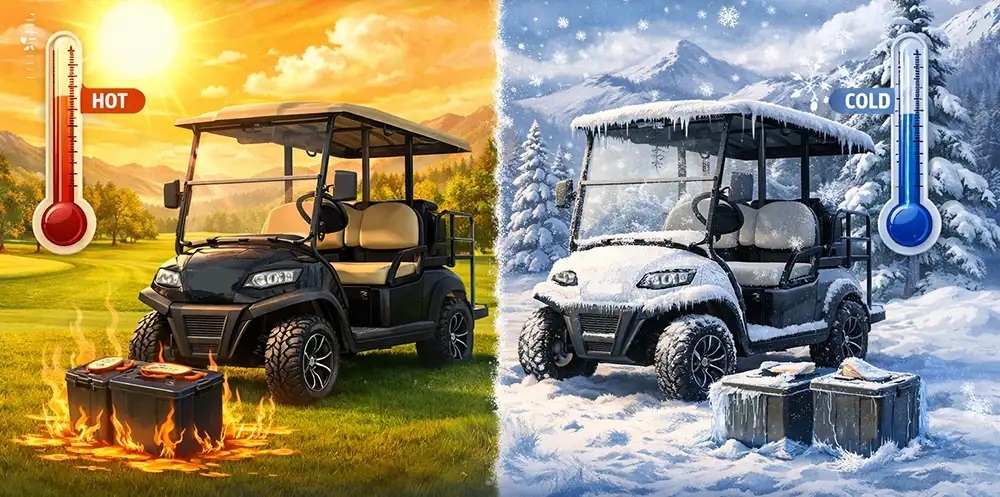
Extreme heat and freezing cold can reduce golf cart battery range, shorten battery life, and cause lasting damage.
Yes, extreme temperatures can significantly affect your golf cart battery. Whether your cart uses lead-acid, AGM, gel, or lithium batteries, temperature plays a major role in battery performance, charging efficiency, driving range, and long-term lifespan. Both excessive heat and freezing cold can change the way internal chemical reactions happen inside the battery, which can reduce power output and sometimes cause permanent damage.
Many golf cart owners notice battery problems during the hottest summer months or after long winter storage. In hot weather, batteries may lose water faster, degrade more quickly, and suffer from stress caused by high internal temperatures. In cold weather, the battery may feel weaker, the cart may lose range, and charging may become more limited. If the battery is poorly maintained or stored at a low charge, freezing conditions can become especially dangerous.
Understanding how temperature affects batteries helps you protect your investment. Golf cart batteries are not cheap, and poor temperature management can shorten their life dramatically. With proper storage, charging habits, inspection, and maintenance, you can reduce damage and keep your cart performing better throughout the year.
| Temperature Condition | Main Battery Effect | Common Result |
|---|---|---|
| Extreme Heat | Speeds up chemical aging and can increase water loss in lead-acid batteries. | Shorter battery life, reduced capacity, corrosion, and possible overheating. |
| Extreme Cold | Slows chemical reactions and reduces available power output. | Temporary range drop, slower performance, and limited charging ability. |
| Freezing Temperatures | Can freeze a discharged lead-acid battery and damage internal plates or case. | Permanent battery failure, cracking, leaking, or inability to hold charge. |
| Poor Storage | Leaving batteries discharged in hot or cold conditions accelerates damage. | Reduced lifespan and expensive replacement needs. |
Heat is one of the biggest enemies of golf cart batteries. While a battery may seem to perform strongly in warm weather at first, high temperatures speed up internal chemical reactions. Over time, this causes faster degradation. The battery may lose capacity, meaning it can no longer store as much energy as it did when new.
In practical terms, your golf cart may not travel as far on a full charge. You may also notice the battery discharges faster during normal use. Long-term heat exposure can shorten battery life, even if the cart appears to operate normally in the moment.
Flooded lead-acid golf cart batteries are especially sensitive to heat because they contain liquid electrolyte. In hot weather, water evaporates more quickly from the cells. If water levels drop too low, the internal plates can become exposed. Once that happens, permanent damage can occur.
This is why regular water level checks are important for flooded lead-acid batteries. Only distilled water should be used, and water should be added according to the manufacturer’s instructions. Overfilling is also a mistake because electrolyte can overflow during charging.
Thermal runaway is a dangerous condition where a battery becomes hotter and hotter due to uncontrolled internal reactions. While it is not common under normal use, it can happen when batteries are damaged, overcharged, exposed to extreme heat, or paired with the wrong charger.
Modern lithium batteries usually include a battery management system to help reduce this risk. However, no battery should be exposed to careless charging, extreme heat, physical damage, or poor ventilation. If a battery smells unusual, swells, leaks, becomes extremely hot, or shows warning signs, stop using it and have it inspected.
Cold weather slows the chemical reactions inside a battery. This means the battery cannot deliver energy as easily. Your golf cart may feel less powerful, accelerate more slowly, or lose driving range in cold conditions.
This range loss is often temporary. When temperatures rise, the battery may recover much of its normal performance. However, repeated deep discharges in cold weather can still shorten battery life, especially if the battery is not fully charged before use.
Lead-acid batteries are at risk of freezing when they are discharged. A fully charged lead-acid battery has a lower freezing point, while a deeply discharged battery can freeze much more easily. If the electrolyte freezes, it can expand and damage the internal plates or crack the battery case.
This is one of the most serious winter battery problems. A frozen battery may not recover, even after it thaws. It may leak, fail to hold charge, or become unsafe to use.
Cold temperatures can also affect charging. Lithium batteries in particular may have charging limits in freezing conditions. Many lithium battery systems prevent charging when temperatures are too low because charging below safe limits can damage the cells.
If your golf cart uses lithium batteries, follow the manufacturer’s winter charging instructions. Some batteries include low-temperature protection or heating features, but not all do. Never force-charge a battery that the system is trying to protect.
| Best Practice | Why It Helps |
|---|---|
| Store in Climate-Controlled Areas | Protects batteries from extreme heat, freezing conditions, and rapid temperature swings. |
| Keep Batteries Charged | A charged battery is less likely to freeze and performs better during storage. |
| Maintain Fluid Levels | Flooded lead-acid batteries need proper distilled water levels to prevent plate damage. |
| Upgrade to Smart Batteries | Modern lithium batteries with a battery management system can improve monitoring and protection. |
| Use the Correct Charger | A charger matched to the battery chemistry helps prevent overcharging, undercharging, and temperature-related damage. |
The best way to protect golf cart batteries is to store the cart in a cool, dry, and protected space. A garage, shed, or covered storage area is better than leaving the cart exposed to direct sunlight, rain, snow, or freezing wind.
Climate-controlled storage is ideal, especially for long winter periods or extremely hot climates. If climate control is not available, reduce exposure by parking in shade, using proper ventilation, and avoiding sealed spaces that trap heat.
Batteries should not be stored in a discharged state. A low battery is more vulnerable to freezing, sulfation, and permanent damage. Before storage, charge the battery according to the manufacturer’s instructions.
For lead-acid batteries, periodic charging may be needed during long storage. For lithium batteries, storage charge recommendations may differ, so follow the battery manual. The key is to avoid leaving any battery completely drained for long periods.
If your golf cart uses flooded lead-acid batteries, check water levels regularly. Heat speeds up evaporation, and low electrolyte levels can expose plates and ruin the battery. Use only distilled water, and fill to the proper level after charging unless the manufacturer recommends otherwise.
AGM, gel, and lithium batteries do not require watering. If you are tired of routine water checks and corrosion cleaning, upgrading to a lower-maintenance battery type may be worth considering.
Modern smart batteries can help reduce temperature-related risks. Many lithium golf cart batteries include a battery management system that monitors voltage, current, temperature, charge status, and protection limits. This can help prevent unsafe charging or discharging conditions.
A smart battery does not remove the need for proper care, but it gives the battery better protection and more consistent performance. For golf cart owners who want easier maintenance and better monitoring, a modern battery upgrade can be a practical solution.
Batteries can be ruined if they freeze, especially lead-acid batteries that are discharged. When electrolyte freezes, it expands. This expansion can bend plates, damage separators, crack the case, and cause internal failure. A battery that has frozen may not hold a proper charge afterward.
If you suspect a battery is frozen, do not charge it immediately. Move it to a safe area and allow it to thaw naturally. Inspect for cracks, leaks, swelling, or unusual odor. If there is visible damage, the battery should be replaced and handled carefully.
A fully charged lead-acid battery is much less likely to freeze than a discharged one. This is why keeping batteries charged during winter storage is so important.
Extreme temperatures can strongly affect golf cart batteries. Heat speeds up aging, causes water evaporation in flooded lead-acid batteries, and can increase the risk of overheating. Cold weather reduces range, slows performance, limits charging, and can freeze discharged lead-acid batteries.
To protect your golf cart battery, store it in a climate-controlled or protected area, keep it charged, maintain water levels if required, use the correct charger, and consider smart battery technology for better protection. With proper care, your golf cart battery can deliver better range, longer life, and more reliable performance in changing weather conditions.
