
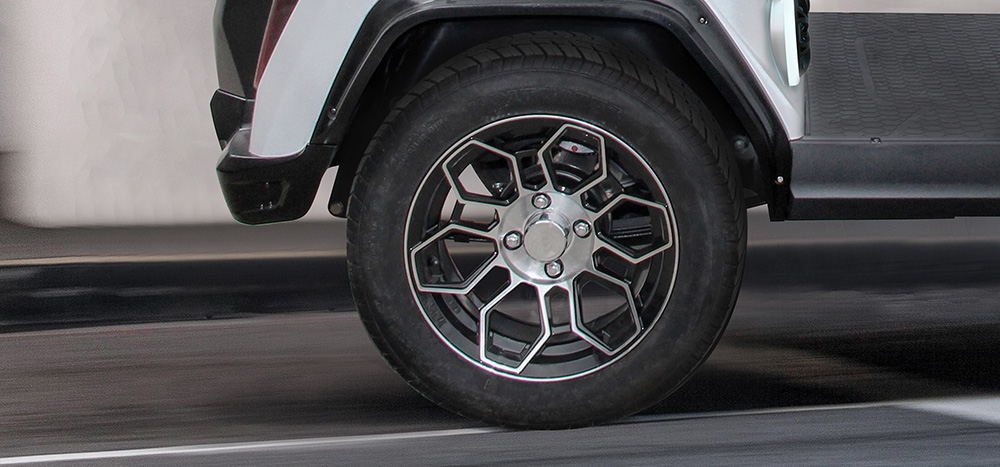
Most modern golf cart tires are tubeless and do not come with inner tubes, offering better performance and fewer flats. However, inner tubes can be installed in existing tubeless tires as a cost-effective repair for leaks caused by dry rot, damaged rims, or leaky beads.
The shift to tubeless tires in golf carts mirrors trends in automotive and powersports industries. Tubeless designs eliminate the inner tube, allowing the tire to seal directly against the rim. This construction reduces weight, improves heat dissipation, and provides better puncture resistance. When a small object punctures a tubeless tire, the tire often self-seals around the object due to the internal pressure and rubber compounds, preventing immediate air loss. This makes tubeless tires far more reliable for everyday use on golf courses, neighborhoods, and resorts where downtime from flats can be frustrating.
Determining whether your golf cart tires have tubes is straightforward with two simple checks:
Look at the valve stem where you add air. If the stem is rigidly attached to the rim and appears molded or bolted directly into the wheel, your tire is almost certainly tubeless. If the stem seems flexible or part of a separate rubber tube that can be pulled slightly, it indicates a tube-type tire.
Check the sidewall of the tire for markings. Most tubeless tires are clearly labeled “TUBELESS” or “TL”. Older tube-type tires may say “TUBE TYPE” or have no such marking. This label is the quickest and most reliable indicator.
A flat with a tubeless tire is usually less catastrophic than with a tube-type tire. The tire often holds air long enough to drive slowly to a repair location. Many punctures self-seal temporarily due to the tire’s inner liner. However, larger punctures or damage near the bead can cause rapid air loss. In these cases, you may need to use a plug kit, slime, or professional repair. Unlike tube-type tires where a puncture instantly deflates the tube, tubeless designs give you more time and options. Always carry a portable air compressor or tire repair kit when using tubeless tires for peace of mind.
While tubeless tires are superior for most golf cart applications, they have a few drawbacks:
These downsides are minor compared to the benefits for most users, which is why tubeless tires dominate modern golf carts.
Adding inner tubes to tubeless tires is a popular and inexpensive fix for persistent leaks caused by dry rot, bent rims, or poor bead sealing. Many owners do this as a temporary or long-term solution when a new tire isn’t immediately affordable. The process involves deflating the tire, inserting the tube, and remounting. While it adds a small amount of weight and rolling resistance, it often solves chronic flat issues and extends the life of aging tires.
When replacing tires, opt for high-quality tubeless models designed specifically for golf carts. These tires offer better traction, smoother ride, and longer tread life. For maximum reliability, choose reputable brands and have them professionally mounted and balanced. If you frequently encounter thorns, sharp rocks, or rough terrain, consider heavy-duty tubeless tires or keep a spare tube on hand as a backup repair option.
Most modern golf cart tires are tubeless, providing better performance, fewer flats, and easier maintenance than older tube-type designs. Learning how to identify your tire type and understanding repair options helps you make informed decisions and avoid unexpected downtime. While tubeless tires are the standard for good reason, adding inner tubes remains a practical and cost-effective solution for older or leaking tires. For reliable transportation that enhances your golf cart experience, explore quality options from trusted golf carts specialists who can recommend the best tire setup for your needs.
