
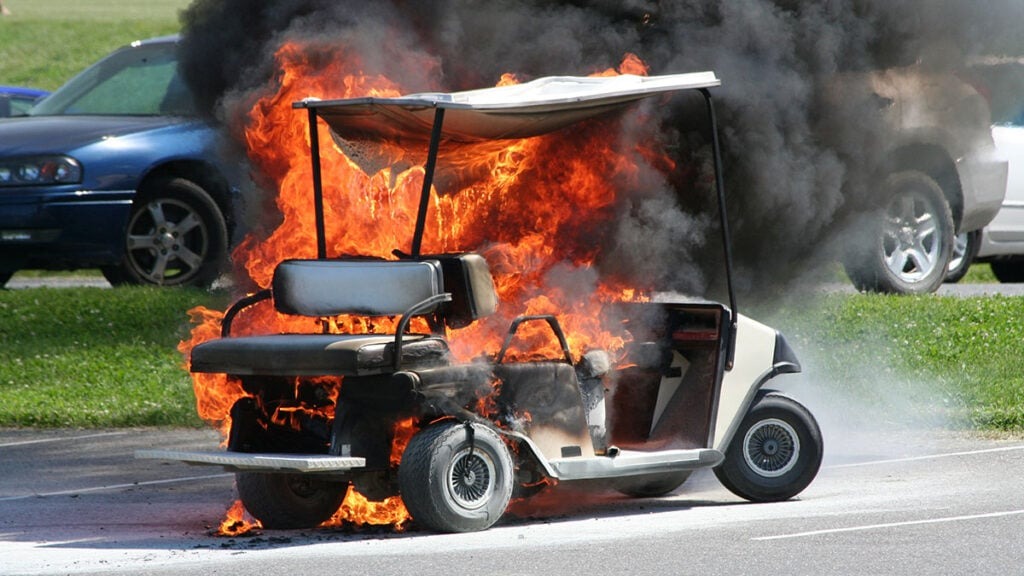
Yes, lithium-ion batteries in golf carts can catch fire — usually from overcharging, using improper chargers, physical damage, or water submersion. While generally safe, these batteries can experience “thermal runaway” if abused or defective, leading to intense, fast-spreading fires that are difficult to extinguish. Modern LiFePO4 chemistry and proper installation dramatically reduce this risk.
Lithium golf cart batteries are far safer than many people assume — especially when using high-quality LiFePO4 (lithium iron phosphate) packs from reputable manufacturers. Unlike older lithium chemistries (NMC/NCA) used in some consumer devices, LiFePO4 has inherently high thermal stability and very low risk of thermal runaway. Industry data from 2026 shows fire incidents involving certified golf cart lithium batteries remain extremely rare — far lower than gasoline-powered carts, home fires, or even common household appliances.
Most reported incidents trace back to preventable human error or substandard equipment rather than the battery chemistry itself:
Thermal runaway is a chain reaction where one cell overheats, releases energy, and triggers adjacent cells to do the same. This can produce intense heat (up to 1,000°C+), flammable gases, and fire. In LiFePO4 batteries, thermal runaway is much harder to initiate — the chemistry is stable up to ~270°C before decomposition begins, compared to ~150–180°C for NMC/NCA cells. Certified LiFePO4 packs include multi-layer protection: cell-level fuses, ceramic separators, pressure vents, and advanced BMS that cut power long before dangerous temperatures are reached.
Watch for these red flags — any one requires immediate inspection and removal from service:
If any of these occur, stop using the cart, move it outdoors to a safe area, and contact the manufacturer or a certified technician.
Prevention is straightforward and effective:
The actual risk is extremely low. Industry data from certified LiFePO4 systems shows fire/explosion rates well below 0.001% per year of operation — orders of magnitude lower than gasoline vehicles or home electrical fires. Most incidents involve counterfeit cells, improper chargers, or severe physical abuse. With proper installation and use of quality products, the probability of a fire is comparable to — or lower than — common household risks like space heaters or dryers.
Lithium golf cart batteries can catch fire — but only under extreme abuse, defective cells, or improper charging practices. Modern LiFePO4 chemistry, combined with advanced BMS protection, certified chargers, and basic safety habits, makes them very safe for everyday use. The vast majority of owners experience zero fire-related issues over 8–12+ years of service. The benefits of longer life, faster charging, lighter weight, and zero maintenance far outweigh the very low risk when you choose quality products and follow simple precautions.
