
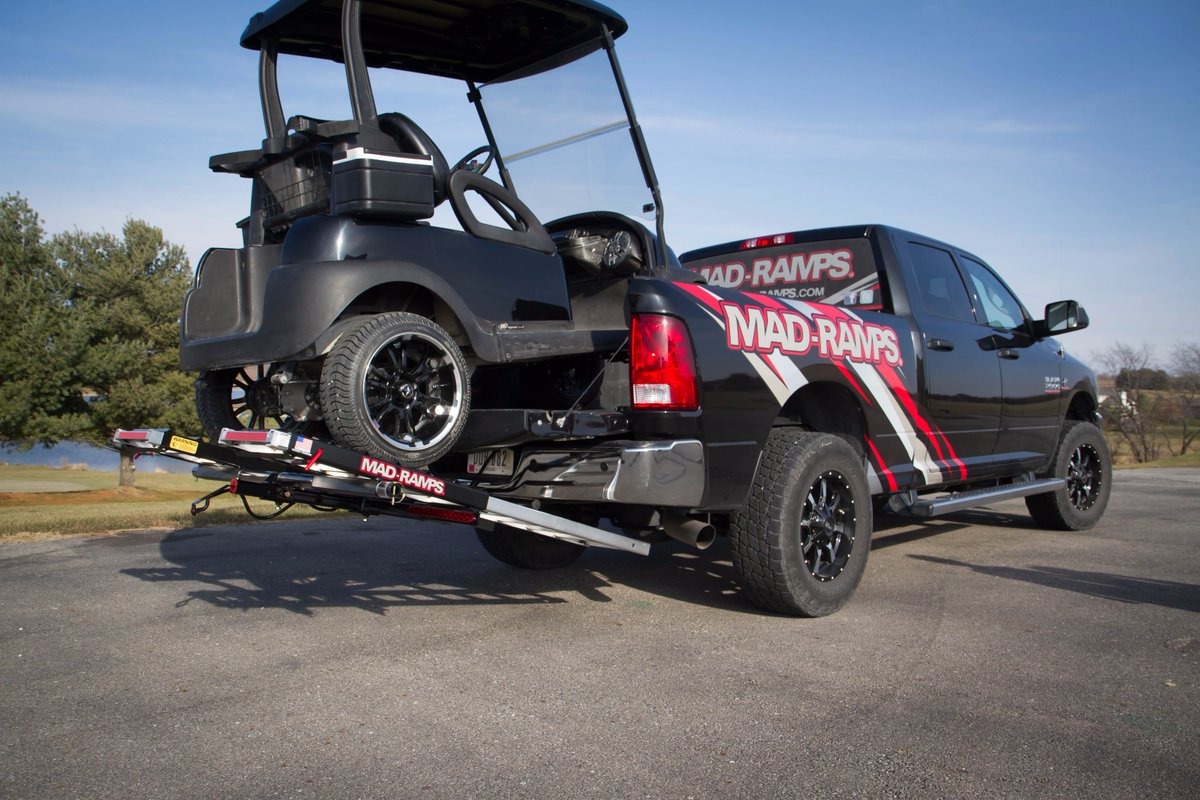
A standard two-seater golf cart (approx. 92’’L x 48’’W) will usually fit in a full-size pickup truck, but generally requires an 8-foot bed to close the tailgate, or a 6-foot bed with the tailgate down. The cart will likely rest on the tailgate in shorter beds. Measure your specific bed width (typically 48-50 inches between wheel wells) and check your truck’s payload capacity, as a cart can weigh 1000 lbs.
Most standard two-seater golf carts measure approximately 92–96 inches long and 48–50 inches wide. These dimensions allow them to fit inside the bed of many full-size pickup trucks, but the actual fit depends heavily on your truck’s bed length and configuration. Short-bed trucks (5.5–6 feet) usually require the tailgate to be lowered or the cart positioned diagonally. Long-bed trucks (8 feet) offer the most flexibility, often allowing the tailgate to close completely for safer highway transport. Always measure your specific truck bed width between the wheel wells — most are 48–50 inches, which matches the typical golf cart width perfectly.
Full-size trucks with 8-foot beds provide the easiest fit. Mid-size trucks (such as Tacoma or Colorado) with 6-foot beds can accommodate a cart with the tailgate down, but you’ll need to secure it carefully. Compact trucks rarely work without a trailer. Crew-cab configurations often have shorter beds, so double-check your exact bed length before attempting to load.
The critical measurement is the distance between the wheel wells. If your cart is wider than this space, it won’t fit flat. Most modern golf carts are designed to clear standard truck beds, but lifted or customized carts with wider tires may require a trailer instead.
A typical two-seater golf cart weighs 800–1,100 pounds. Always verify your truck’s payload capacity (found on the driver’s door sticker) before loading. Exceeding this limit affects braking, handling, and safety. Distribute weight evenly and use proper tie-down straps rated for at least 1,500 pounds each.
Use sturdy loading ramps rated for at least 1,500 pounds. Drive the cart straight up the ramps slowly. Once inside, secure the front and rear with heavy-duty ratchet straps. Never rely on the parking brake alone. For longer trips, consider a trailer for better stability and protection from road debris.
Standard two-seater models from major brands fit most full-size truck beds with minimal modification. Four-seater carts are significantly longer (often 120+ inches) and usually require a trailer or long-bed truck with the tailgate down. Lifted or custom carts with larger tires may not fit at all without removal of wheels or body panels. Measure your specific cart (length, width, and height) and compare it to your truck bed dimensions before attempting to load.
The safest and most reliable method is using a dedicated utility trailer. Trailers eliminate bed-length concerns, provide better weight distribution, and protect the cart from road debris. If a trailer isn’t available, a full-size pickup with an 8-foot bed is the next best option. Always use quality ramps, multiple heavy-duty straps, and check tire pressure and brakes before every trip. For frequent transport, investing in a trailer is the smartest long-term solution.
When a truck bed isn’t practical, several alternatives work well:
For owners who regularly need to move their cart, a small utility trailer designed specifically for golf carts is often the most convenient investment.
Fitting a golf cart in a truck bed is possible for most standard two-seater models, especially in full-size trucks with 6- or 8-foot beds. Success depends on accurate measurements, proper loading technique, and staying within your truck’s payload limits. While a truck bed works well for occasional short trips, a dedicated trailer offers superior safety and convenience for frequent or long-distance transport. Whether you’re moving your cart to a new home, taking it on vacation, or delivering it to a buyer, planning ahead and using the right equipment ensures a safe and damage-free journey.
